
What This Guide Covers
- Stamped concrete patterns, colours and finish choices
- Council and vehicle crossing considerations
- Maintenance, durability and value for Hamilton homes
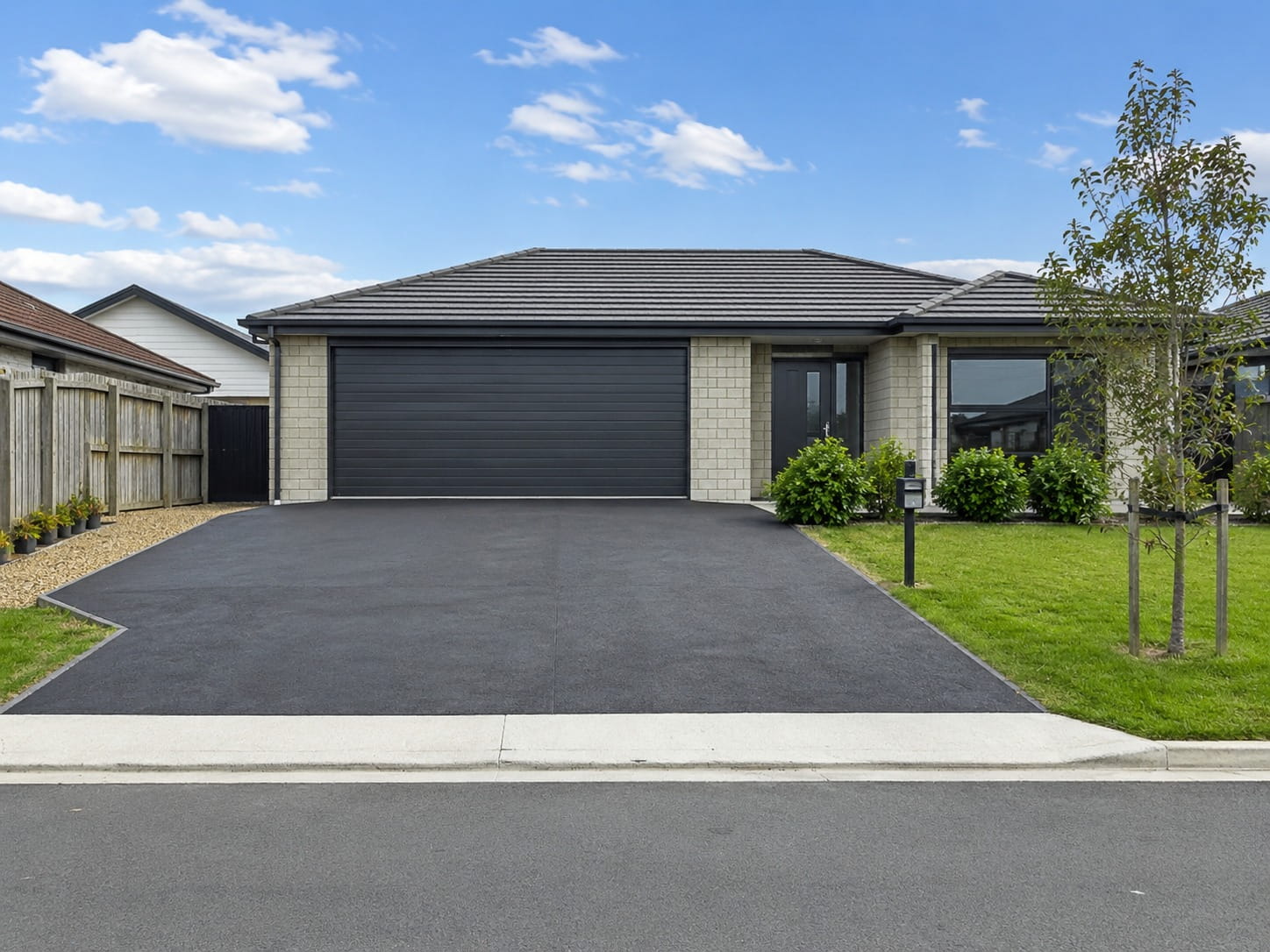
Asphalt is a popular choice for Hamilton driveways — it's cost-effective, durable, quick to install, and handles the Waikato's clay-heavy soils well. If you're considering an asphalt driveway for your Hamilton property in 2026, this guide covers everything you need to know: realistic costs, what's included in a good installation, Hamilton City Council requirements, maintenance expectations, and how asphalt compares to concrete.
How Much Does an Asphalt Driveway Cost in Hamilton?
Asphalt driveway costs in Hamilton typically range from $80 to $150 per square metre installed. For a standard residential driveway, here's what to budget:
- Small driveway (40m sq): $3,200 to $6,000
- Medium driveway (60m sq): $4,800 to $9,000
- Large driveway (80 to 100m sq): $6,400 to $15,000
These figures include excavation, sub-base preparation, and hot mix asphalt installation. Additional costs that may apply to your project:
- Demolition of existing surface: $500 to $2,000
- Drainage installation or modification: $500 to $2,500
- Decorative edging (granite, bluestone, concrete border): $500 to $2,000
- Vehicle crossing upgrade (if required by council): $800 to $3,000
- Resealing (required every 5 to 7 years): $300 to $800
Beware of quotes significantly below $80/m sq. Underpriced installations typically involve inadequate sub-base preparation or insufficient asphalt thickness, both of which lead to premature failure.
What is Included in a Good Asphalt Driveway Installation in Hamilton?
Understanding what goes into a quality asphalt installation helps you evaluate quotes and avoid being undercut by contractors who cut corners.
Step 1: Site preparation and excavation
The existing surface (if any) is removed and the area is excavated to the required depth — typically 200 to 250mm for a residential driveway. The depth of excavation depends on your soil type. Hamilton's clay soils often require deeper preparation to ensure adequate sub-base stability.
Step 2: Sub-base installation and compaction
A layer of crushed aggregate base course (AP40 or AP65 in NZ terms) is laid and compacted mechanically to create a stable, load-bearing foundation. This is the most critical step in asphalt driveway installation — skimping on sub-base depth or compaction is the primary reason driveways fail prematurely.
Step 3: Hot mix asphalt installation
Hot mix asphalt (HMA) is laid at the correct temperature using a paving machine or by hand for smaller areas. For residential driveways, a minimum of 25mm of compacted asphalt is standard; 30 to 40mm is preferable for driveways with regular heavy vehicle use.
Step 4: Compaction and finishing
The asphalt is compacted with a roller to achieve the specified density. Edges are trimmed and finished, and any drainage channels or edging installed.
Step 5: Curing
Asphalt cures as it cools. It is typically ready for pedestrian use within a few hours and vehicle use within 24 to 48 hours, depending on ambient temperature. It reaches full strength within 6 to 12 months.
Hamilton City Council Requirements for Asphalt Driveways
All driveway work in Hamilton must comply with Hamilton City Council's requirements, regardless of whether the surface is asphalt, concrete, or pavers. Here's what Hamilton homeowners need to know.
Vehicle crossing approval
The vehicle crossing — the section of driveway between your property boundary and the road kerb — must meet Hamilton City Council standards. This includes:
- Minimum width of 3.0m (wider for some zones or property types)
- Maximum gradient (generally no steeper than 1:4 for residential crossings)
- Stormwater management to prevent runoff onto the footpath or road
- Integrity of the kerb and channel (your contractor must restore any damage)
If you're installing a new crossing or modifying an existing one, you need to obtain approval from Hamilton City Council's infrastructure team before work begins. Your contractor should handle this process as part of the job.
Stormwater management
Asphalt is an impermeable surface. When installed over a significant area, it increases stormwater runoff, which Hamilton City Council manages through its district plan. For large driveway or yard paving projects, you may need to demonstrate that your stormwater management plan is adequate — particularly in Hamilton's higher-density residential zones.
Some Hamilton homeowners choose permeable paving options for areas where stormwater management is a concern. If this applies to your site, discuss the options with your contractor.
Impermeable surface coverage limits
Hamilton City Council's district plan limits the total impermeable surface coverage on residential sections in many zones. If you're adding a large new asphalt area, check that your total coverage stays within permitted limits. Your contractor or a planning consultant can assist with this.
Asphalt vs Concrete for Hamilton Driveways
The choice between asphalt and concrete for a Hamilton driveway is one of the most common questions we receive. Here's an honest comparison.
Upfront cost: Asphalt wins. Asphalt driveways in Hamilton cost $80 to $150/m sq vs $120 to $180/m sq for concrete. For a 60m sq driveway, that's a potential saving of $2,400 to $4,800 upfront.
Longevity: Concrete wins. A quality concrete driveway in Hamilton lasts 30 to 40 years with minimal maintenance. A quality asphalt driveway lasts 15 to 25 years with regular resealing.
Maintenance: Concrete wins. Asphalt requires resealing every 5 to 7 years at a cost of $300 to $800. Concrete requires minimal maintenance beyond occasional cleaning and crack filling.
Repairs: Asphalt wins. Small asphalt repairs are quick and cost-effective. Concrete repairs are more visible and harder to match invisibly.
Aesthetics: Concrete wins for design options. Concrete can be coloured, stamped, exposed aggregate finished, or polished. Asphalt is available in one colour: black.
Hamilton climate performance: Both perform well. Asphalt's flexibility gives it an advantage on clay soils, as it can accommodate minor ground movement without cracking. Concrete is more susceptible to cracking from sub-base movement.
The verdict: If upfront cost is the primary consideration and you're comfortable with ongoing maintenance, asphalt is a sound choice. If you want a long-term, low-maintenance solution and are willing to invest more upfront, concrete delivers better value over the driveway's lifetime.
Asphalt Driveway Maintenance in Hamilton
A properly maintained asphalt driveway in Hamilton will significantly outlast a neglected one. Here's what good maintenance looks like:
- Resealing every 5 to 7 years: Asphalt oxidises over time, becoming brittle and prone to cracking. Resealing with a quality coal tar or acrylic sealer protects the surface and extends its life. In Hamilton's climate, the optimal time for resealing is late spring or early summer when temperatures are warm and consistent.
- Crack filling: Small cracks should be filled promptly before water ingress allows them to grow. DIY crack filler is available from hardware stores, but for larger or structural cracks, professional repair is advisable.
- Cleaning: Oil and fuel stains should be cleaned promptly to prevent penetration and surface degradation. A degreaser and stiff brush works well for fresh stains.
- Edge protection: The edges of an asphalt driveway are the most vulnerable area. Avoid heavy vehicle tyres running off the edge onto soft soil, and consider installing concrete or timber edging to protect and define the driveway boundary.
Get a Free Asphalt Driveway Quote in Hamilton
Hamilton Concrete Driveways installs quality asphalt driveways across Hamilton and the Waikato region. We handle everything from initial site assessment and council compliance through to excavation, sub-base preparation, and installation. Our team will give you an honest comparison between asphalt and concrete options so you can make the right choice for your property and budget.
Contact us today for a free, no-obligation site assessment and quote.