
What This Guide Covers
- Stamped concrete patterns, colours and finish choices
- Council and vehicle crossing considerations
- Maintenance, durability and value for Hamilton homes
Concrete laying is one of those trades where the gap between experienced professionals and inexperienced operators is enormous — and where mistakes are expensive to fix. Unlike painting or landscaping, concrete work cannot easily be undone. Once the mix is poured and cured, you live with the result for decades.
Finding experienced concrete layers in Hamilton requires knowing what to look for, what questions to ask, and what separates genuinely skilled concreters from those who've poured a few residential slabs and believe that qualifies them for any job.
This guide covers everything Hamilton homeowners need to know about selecting the right concrete professional for their project.
What Concrete Layers Actually Do
The term concrete layer covers a wide range of skills and project types. In Hamilton, a qualified concrete layer should be able to handle:
- Site preparation: Assessing sub-grade conditions, excavating to appropriate depth, and laying and compacting sub-base aggregate.
- Formwork: Setting up the timber or steel forms that contain the concrete pour, ensuring correct dimensions, levels, and drainage grades.
- Reinforcement placement: Installing reinforcement mesh or bar at the correct position within the slab depth.
- Concrete ordering and placement: Specifying the correct mix for the project, coordinating the delivery, and pouring and spreading the concrete to the correct thickness and level.
- Finishing: Achieving the specified surface finish — whether plain broom, exposed aggregate, stamped, or coloured — within the workable window after pouring.
- Control joint placement: Installing saw cuts or tooled joints at the correct spacing and depth to manage shrinkage cracking.
- Curing management: Ensuring the concrete cures at the right rate, preventing rapid moisture loss in hot or windy Hamilton conditions.
Not every person who calls themselves a concrete layer in Hamilton has experience with all of these elements. Decorative finishes in particular require specific skills that not all concreters possess.
How to Assess Experience When Choosing Concrete Layers in Hamilton
Years of local experience
Ask specifically about their Hamilton experience, not just their general industry tenure. Hamilton's clay soils, seasonal climate, and council requirements differ from other regions. A concrete layer who has worked extensively in Hamilton will understand these variables. Ask: How long have you been laying concrete in Hamilton? What types of projects have you worked on in the Waikato?
Portfolio of relevant work
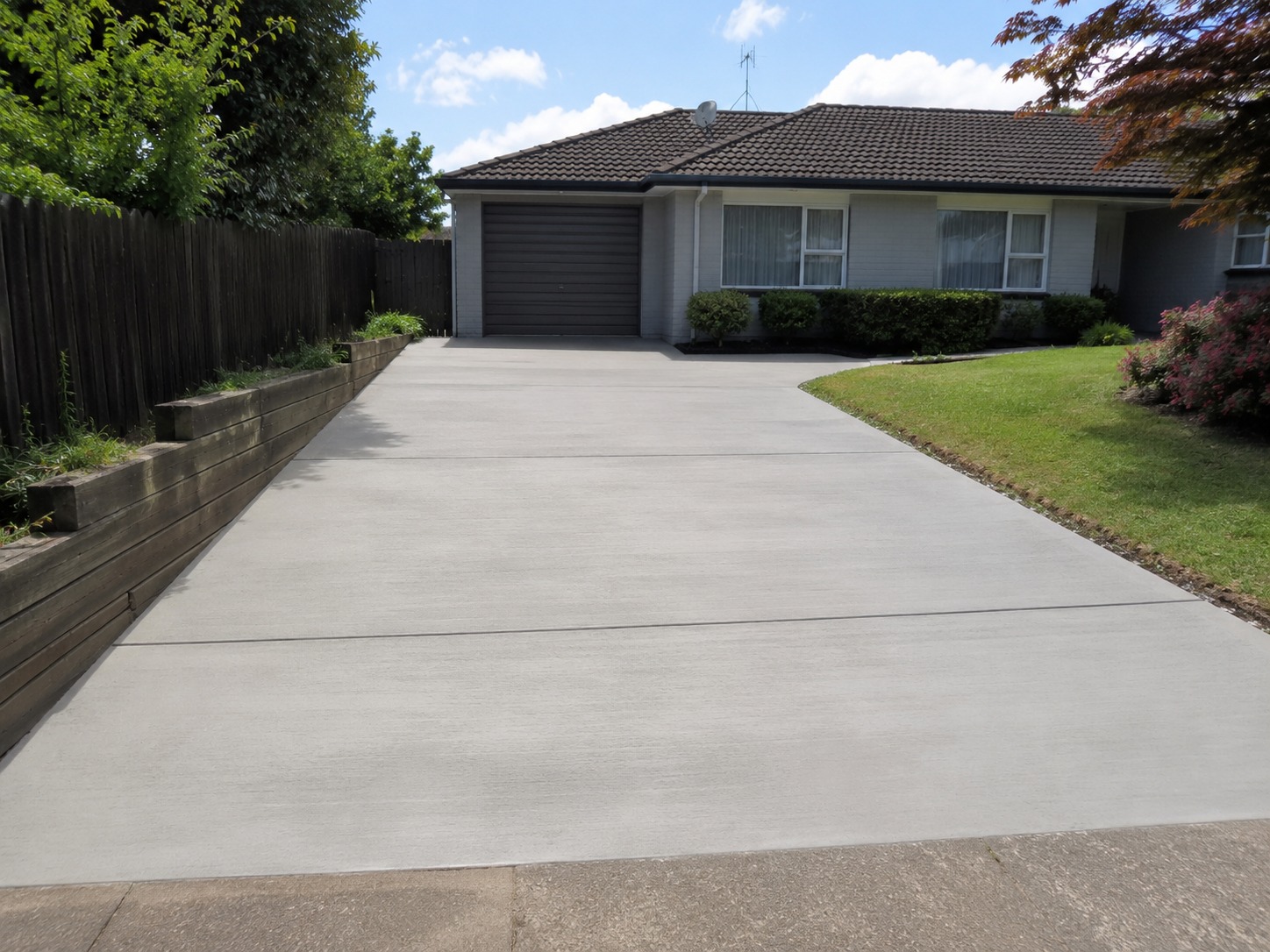
For standard residential driveway work, photos of recent projects are a reasonable indicator of quality. For decorative finishes — exposed aggregate, stamped concrete, coloured concrete — photos are essential. Ask to see work specifically in the finish you're requesting. Not every concrete layer who quotes exposed aggregate has actually delivered a high-quality exposed aggregate result.
References from Hamilton homeowners
A confident, experienced Hamilton concrete layer will have no hesitation providing references from recent projects. Contact them. Ask specifically: Was the finished work consistent with what was quoted? Were there any issues, and how were they handled? Would you hire them again?
Certification and training
New Zealand has a formal trade qualification for concreters — the National Certificate in Concrete Technology. Not all quality concreters have formal certification (the trade has a significant apprenticeship tradition), but it is a positive indicator. Ask whether any team members hold relevant qualifications.
The Technical Questions That Separate Experienced Concrete Layers from the Rest
The easiest way to assess a Hamilton concrete layer's experience is to ask a few technical questions during the quoting process. Experienced concreters answer these fluently and specifically. Inexperienced ones deflect, generalise, or can't answer.
What MPa concrete mix will you specify for my driveway, and why?
A correct answer specifies 25 MPa for a standard residential driveway, with justification based on expected vehicle loads.
What sub-base preparation are you including, and what compaction method will you use?
The answer should specify material type and depth, and reference mechanical compaction with a plate compactor or roller.
How will you manage shrinkage cracking?
The answer should reference control joints — their spacing (3 to 4m maximum for residential driveways), depth (approximately one-quarter of slab thickness), and method (saw cut or tooled).
How will you handle curing in Hamilton's summer conditions?
The answer should reference curing compounds, hessian covers, or water curing — and awareness that rapid moisture loss in hot or windy conditions can cause surface crazing.
How will drainage work on my driveway?
The answer should describe specific grading direction and discharge point, and any additional drainage work required for your site.
Red Flags When Hiring Concrete Layers in Hamilton
These warning signs should prompt additional scrutiny of any Hamilton concrete professional you're considering:
- Refusal or inability to specify the concrete mix: Any experienced concrete layer should immediately know what mix to specify for a residential driveway. Vagueness here suggests limited technical knowledge.
- No mention of control joints: Experienced concreters think about shrinkage cracking from the start of a project. If a contractor doesn't raise control joints during your site discussion, raise it yourself — and assess the quality of their answer.
- No site visit before quoting: Accurate concrete quoting requires seeing the site. Access, drainage, existing surface condition, sub-grade assessment — all of these affect scope and cost and cannot be assessed remotely.
- No written quote or contract: Any concrete project over $1,000 should have a written scope of work and quote. Verbal agreements in concrete work are how disputes begin.
- Pressure to pay a large cash deposit before work begins: A reasonable deposit (10 to 20%) is standard in the trade. Demands for 50% or more upfront from a new contractor warrant caution.
What to Include in Your Concrete Contract in Hamilton
A professional Hamilton concrete layer will provide a written quote or contract that specifies:
- Full scope of work including site preparation, sub-base specification, formwork, reinforcement, concrete mix, finish, and control joint method
- Timeline with start date and estimated completion
- Payment schedule (typically deposit, progress payment, and balance on completion)
- Workmanship guarantee period and what it covers
- Process for handling variations to the agreed scope
- What happens if weather or other factors cause delays
Do not proceed without a written scope and quote. If issues arise after completion, a detailed written agreement is your primary recourse.
Hamilton Concrete Driveways: Experienced Concrete Layers Since 2004
The team at Hamilton Concrete Driveways has been laying concrete across Hamilton and the Waikato for over 20 years. Our concrete layers have experience across the full range of residential and commercial concrete work — from plain driveways through to decorative exposed aggregate and stamped concrete finishes.
We provide detailed written quotes that specify every element of the installation, and we back our work with a written workmanship guarantee. Contact us today for a free site assessment.